Drone Flying LED Mesh Screen: Revolutionary Display Technology for Aerial Events
Drone flying led screen: Revolutionary Display Technology for Outdoor Advertising&Events
- 1. Introduction to Drone LED Mesh Screen
- 2. What is Drone flying led screen?
- 3. Key Features and Specifications
- 4. Applications and Use Cases
- 5. Technical Advantages
- 6. Installation and Setup
- 7. Comparison with Traditional LED Screens
- 8. Market Trends and Future Outlook
- 9. Choosing the Right Drone LED Mesh Screen
- 10. Frequently Asked Questions
1. Introduction to Drone Flying LED Mesh Screen
The entertainment, advertising, and live events industries are undergoing a dramatic shift with the rise of drone flying LED mesh screen technology. This breakthrough display solution combines ultra-lightweight flexible mesh structure with high-performance RGB LED pixels, delivering stunning aerial visuals previously impossible to achieve.
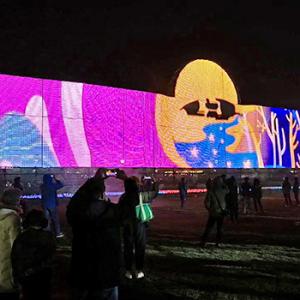
Designed specifically for outdoor aerial events, concerts, brand activations, stadium shows, and architectural media installations, drone LED mesh screens turn the sky into a dynamic canvas. Unlike rigid ground LED walls, floating LED mesh displays redefine engagement, drive viral social sharing, and create unforgettable live experiences worldwide—especially in the Middle East, Europe, USA, and Southeast Asia.
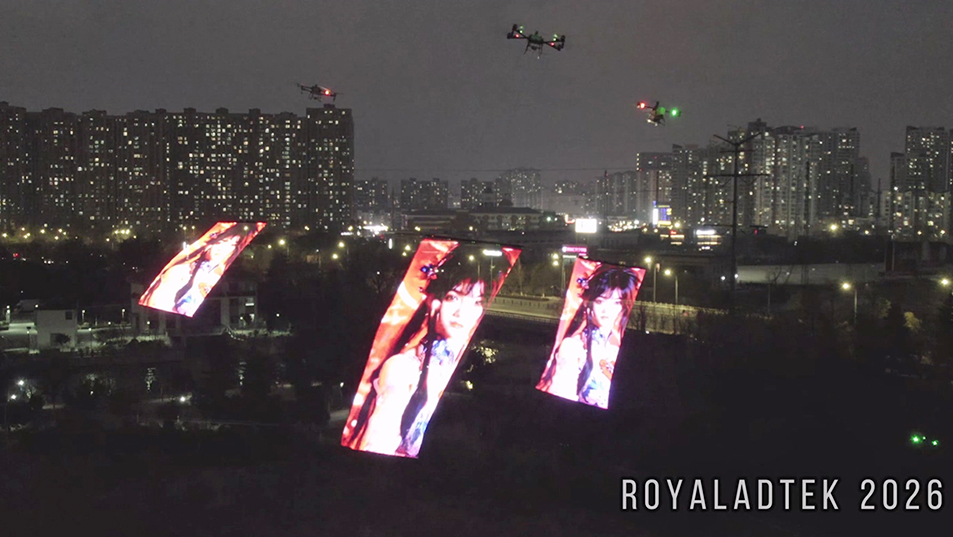
2. What is Drone Flying LED Mesh Screen?
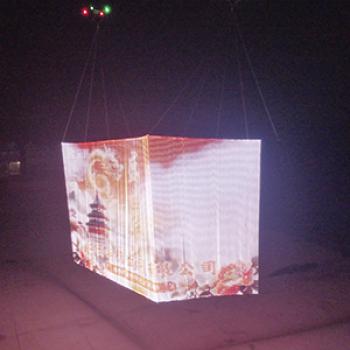
A drone flying LED mesh screen is an ultra-lightweight, flexible, weatherproof LED display system engineered for aerial deployment by drones. It enables high-resolution video, animations, logos, and real-time content to be shown mid-air, creating a floating screen effect.
Core Components:
- Flexible mesh textile base with embedded RGB LED pixels
- Ultra-lightweight LED modules optimized for drone payload limits
- Modular & scalable design for custom sizes (4×8m, 5×10m, etc.)
- IP65-rated outdoor materials, UV-resistant, temperature tolerant
3. Key Features and Specifications
Drone LED mesh screens are purpose-built for stability, brightness, and reliability in aerial environments.
| Feature | Specification |
| Weight | 0.6–1.35 kg/㎡ (P25-4×8m ≈ 38kg) |
| Transparency | 70%+ |
| Brightness | 1,600–3,000 nits |
| Waterproof | IP65 |
| Temperature Range | -20°C ~ +60°C |
| Flight Time | 60+ mins |
| Viewing Angle | 360° |
4. Applications and Use Cases
Drone flying LED mesh screens are widely used globally for premium events and marketing.
- Concerts & Festivals: Floating aerial backdrops, viral social moments(Europe, USA)
- Corporate Launches: Sky-high logos, 360° presentations(UAE, Saudi Arabia)
- Outdoor Advertising: Urban skyline, beach promotions(Middle East)
- Stadium Entertainment: Aerial scoreboards, halftime shows
- Weddings & Celebrations: Personalized sky messages
5. Technical Advantages
- Fast Deployment: 30-minute setup vs. days for traditional LED walls
- Energy Efficient: 120W/㎡ average power, 60+ mins flight
- Safe & Light: Soft mesh, no sharp edges, low fall risk
- High ROI: Reusable for global events, lower logistics cost
6. Installation and Setup
- Site assessment: airspace, obstacles, weather permits
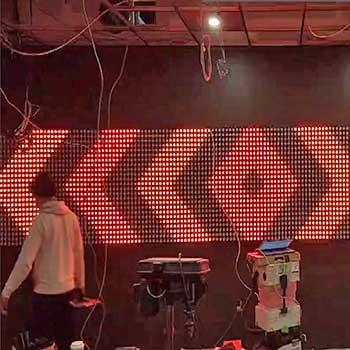
- Module connection: tool-free assembly in 15 mins
- Wireless control: real-time video transmission test
- Drone mounting: secure to heavy-lift drones
- Pre-flight test: pixel check, brightness calibration
7. Comparison with Traditional LED Screens
| Feature | Drone LED Mesh | Traditional LED Wall |
| Weight | 0.5–2 kg/㎡ | 5–15 kg/㎡ |
| Setup Time | Minutes | Hours–Days |
| Flexibility | Bendable, 3D shapes | Rigid, flat only |
| Viewing | 360° aerial | Fixed ground angle |
8. Market Trends and Future Outlook
Demand for experiential marketing is booming. Drone LED mesh screens are top choice for global campaigns in the Middle East, Europe, USA. Future trends include smaller pixel pitches (P15.625/P25), higher brightness for daytime events, and AI interactive displays.
9. Choosing the Right Drone LED Mesh Screen
- Pixel Pitch: P25 ideal for 25–50m aerial viewing
- Weight: ≤0.6kg/㎡ for long flight time
- Brightness: ≥3,600 nits for day/night visibility
- IP Rating: IP65 for outdoor rain/dust protection
- Supplier: Choose manufacturer with projects in UAE, Saudi Arabia, Europe, USA
10. Frequently Asked Questions
Q: How much does a drone LED mesh screen weigh?
A: 0.5–2 kg/㎡; 4×8m P25 ≈ 40kg.
Q: Can it work in rain?
A: Yes, IP65 waterproof for rain/dust. the distribution boxe ports need to cover some plastic bags.
Q: How long is flight time?
A: Up to 60+ minutes with full battery.
Conclusion: Drone flying LED mesh screen redefines aerial events and advertising. Ultra-lightweight, flexible, bright and reliable, it turns the sky into a dynamic canvas for concerts, brand launches and stadium shows worldwide. For custom solutions and global technical support, contact Royaladtek — your professional drone LED mesh screen manufacturer.